
Trust, Access, and the Freedom to Learn
from the president
by Martha Hradowy, President, OSSTF/FEESO
I grew up in a small town where the library was not a grand space or a political symbol. It was simply there. Open. Free. Shared. I remember sitting on the floor, pulling books from the shelves one by one, trying to find the right story while my grandmother quietly built her own stack of novels. Those weekly trips were about time, curiosity, and the comfort of knowing that stories were available to anyone who wanted them. In those quiet moments, a love of reading was passed down without instruction or expectation through presence, routine, and shared space. This always reminds me that storytelling is not just about books, but about how one generation invites the next to imagine, question, and understand the world.
The sense of access that I experienced as a child is something I have watched steadily erode over the course of my career as a Developmental Services Worker supporting students with various learning exceptionalities and needs. Over decades, school libraries have been reduced to shelves with a handful of books. Textbooks and classroom resources have quietly disappeared. Students are increasingly being redirected to access online texts, with the assumption that screens and digital words on a page are an adequate replacement for physical books.
For many students, particularly those who already navigate complex systems, the absence of libraries turns learning and exploring into a conditional experience, shaped by access to technology, affordability, accessibility, and digital environments that are not designed with all learners in mind. In fact, the loss of libraries has often pushed young readers further away from reading altogether. Books invite exploration in a way screens often do not. When we begin banning or restricting the few books that remain accessible, we deepen that disconnection and send a troubling message about whose experiences and questions are allowed to exist in our schools… and whose are not.
That is why beginning my presidency surrounded by books feels deeply symbolic. The cover image for this issue was taken in the W.F. Herman Academy Library in Windsor, Ontario because I believe that ‘getting back to basics’ in public education requires us to restore access to books as a core resource. Education works when teachers and education workers inspire critical thinking and when students have the materials they need to question, explore, and learn. That is intellectual freedom. Being surrounded by books at this moment is a reminder that public education functions best when knowledge is shared, not restricted, and when learning is grounded in trust rather than fear.
Book challenges and censorship undermines the very purpose of education by limiting students’ ability to think critically for themselves. Every day in Ontario public schools, OSSTF/FEESO members spark curiosity and reflection. Our role is not to tell students what to think, but to give them the tools to do so. When books are removed or challenged, it signals that educators’ professional judgement cannot be trusted and that students cannot be trusted to engage thoughtfully with complex ideas. For students who are already marginalized, that message echoes loudly. Your stories are dangerous; your questions are inconvenient; and your experiences are negotiable.
The parallels are clear. Censorship communicates the same lack of trust toward workers in education and students alike. It suggests that decisions about learning should be driven by fear, politics, or external pressure rather than by the professionals who know their students and communities best. This is precisely why unions must play a leadership role in defending intellectual freedom. Freedom of expression is a fundamental right guaranteed by the Canadian Charter of Rights and Freedoms. Without collective action, history shows us that those rights are never guaranteed. When governments attempt to narrow what can be taught, read, or discussed, unions are often among the few organized voices prepared to push back. Defending professional judgement and students’ rights to access diverse ideas is inseparable from defending public education itself.
As we look ahead, these questions extend beyond books alone. Decisions about learning, creativity, and assessment are increasingly shaped by algorithms and technology. While there are opportunities when technology is used to support educators, education remains relational work. No algorithm can understand a student’s lived experience, mental health, or sense of belonging. Human judgement must remain at the centre of education, just as trust must remain at the centre of public schooling.
As President, my commitment to members is clear, you will not face these challenges alone. OSSTF/FEESO will continue to stand up for intellectual freedom and professional judgement. That means defending members when their expertise is questioned, providing guidance and support when books or curriculum are challenged, and approaching new technologies thoughtfully rather than reactively. Change is inevitable, but our values are not. We trust teachers and education workers, and we protect public education.
After reading this issue of Education Forum, I hope you carry one question with you, ‘Who do we trust to make decisions about learning in our schools?” The answer to that question will shape not only what students read, but who they are allowed to become.
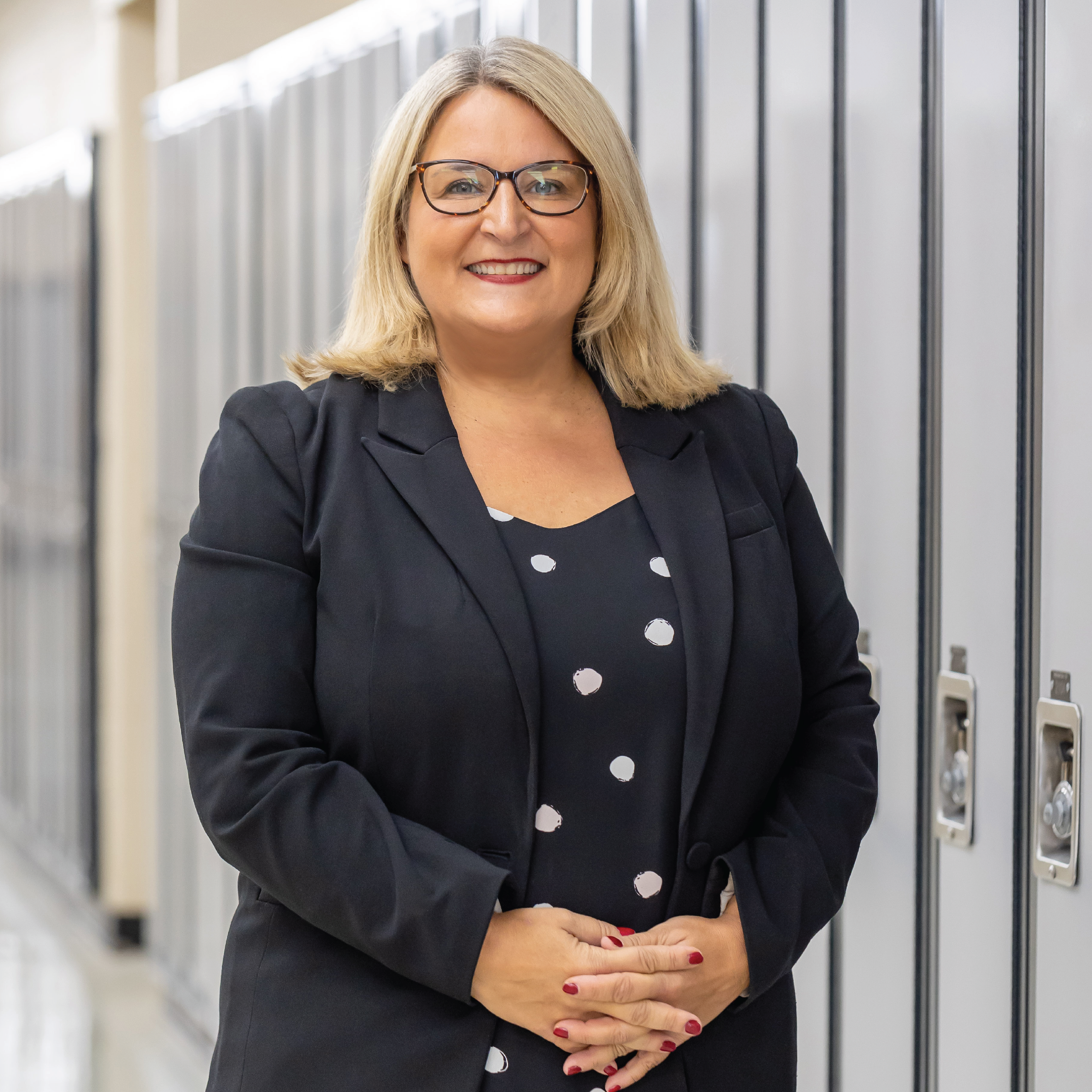
Martha Hradowy is an education worker, union activist, and the first education support staff member elected president of OSSTF/FEESO in the Federation’s 106-year history. Beginning her career as a Developmental Services Worker in Windsor-Essex, Martha has long advocated for strong publicly funded education and the essential role education workers play in supporting students and school communities.
She has held leadership roles at both the district and provincial levels within OSSTF/FEESO, advancing equity initiatives, member engagement, and solidarity across the labour movement. Martha’s leadership is grounded in collaboration, transparency, and a commitment to strengthening an inclusive and united public education system across Ontario.

